
EPIGAMIA
DE-COMMODITIZING DAIRY
THE CRISIS: THE "DAIRY WAR" TRAP
Epigamia has successfully established itself as a premium dairy brand. However, the current "Dairy War" against vertically integrated competitors restricts pricing power and margin expansion. The strategic proposal is to
leverage this brand equity to expand the Total Addressable Market (TAM) beyond the dairy aisle and into the high-margin "Breakfast" occasion.
EXECUTION STRATEGY: OWNING THE CHANNEL
The deployment of the ₹18.51 Contribution Margin funds a proprietary distribution layer. This capital allows the business to bypass retailer inefficiencies, eliminate stockouts, and secure product availability.
Modern Trade "Rack Jobbers" (The Fix)
-
The Strategy: "Recover."
-
The Action: Deploy a fleet of merchandisers to the top 200 stores to physically refill shelves daily, ensuring FIFO compliance.
-
The Logic: Bypassing retailer order caps eliminates the 45% stockout rate. The revenue recovered pays for the merchandiser 1.85x over.
Corporate Vending (The Capture)
-
The Strategy: "Monopolize."
-
The Action: Install smart vending machines in high-density IT parks to serve the 10 AM breakfast occasion.
-
The Logic: Creates a "Captive Audience" with zero retailer margin and a hardware payback period of <7 months.
Q-Commerce Bundles (The Habit)
-
The Strategy: "Lock-in."
-
The Action: Launch "Work Week" 5-Packs (Mon-Fri) on quick-commerce.
-
The Logic: Increases Average Order Value (AOV) to ₹450, bypassing delivery fees and locking in habitual weekly consumption.
THE UNIT ECONOMICS UPGRADE
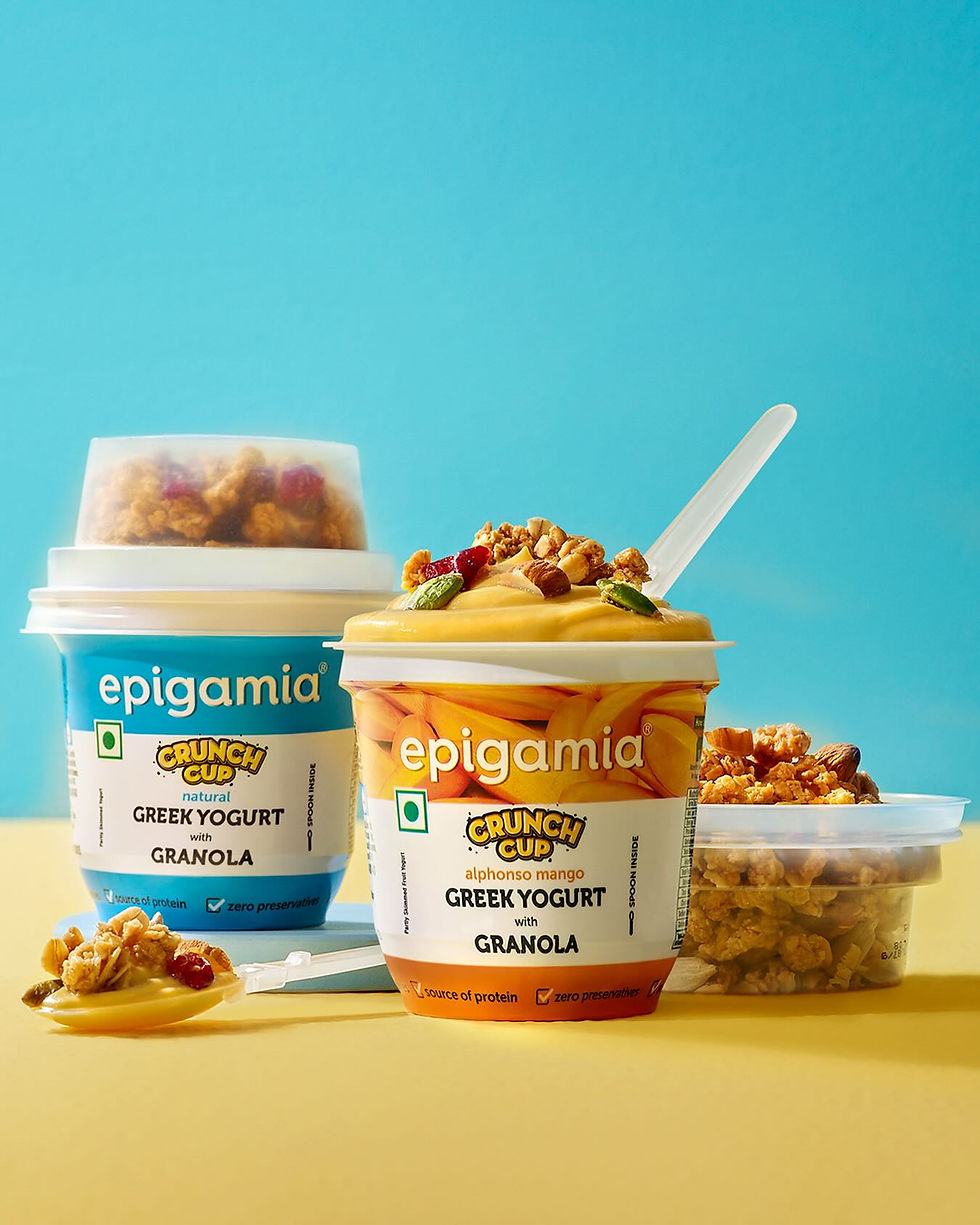
The audit reveals a massive opportunity to improve 'Quality of Revenue.' While the core yogurt SKU suffers from high logistics costs relative to its price , the 'Breakfast' SKU utilizes the same cold chain to deliver 67% higher revenue. The strategy focuses on migrating the customer base to this higher-value tier.
Key Highlights:
Commodity Pricing Pressure
Competitors dominate the ₹30 price point with lower logistics costs.
The Price War
Fighting a price war erodes brand value.
Value Migration
Shift the portfolio mix to "Meal Solutions" (Crunch Cup) to unlock ₹100+ revenue per unit.
The audit reveals a critical 15% cost disadvantage driven by outsourced logistics (18% vs 4.3%). This confirms that the current model cannot survive a price war in the dairy aisle, necessitating an immediate pivot to higher-margin categories
Metric | Core SKU: Voyager Bag | New SKU: Ridge Shirt | Operator Notes |
|---|---|---|---|
Retail Price (MRP) | ₹24,000 | ₹12,000 | Bag has 2x ticket size. |
COGS (Est. 25%) | ₹6,000 | ₹3,000 | Leather is expensive; Cotton is cheap. |
Gross Margin | ₹18,000 (75%) | ₹9,000 (75%) | On paper, the shirt looks profitable. |
Return Rate | 3% (Quality only) | 25% (Size/Fit) | The Killer. Bags fit everyone. Shirts don't. Processing returns costs shipping + refurbishment. |
Obsolescence | Low (Perennial) | High (Seasonal) | A bag sells for 3 years. A shirt expires in 3 months. |
Markdown Impact | 5% sold at discount | 40% sold at discount | You must discount clothing to clear it. |
Net Realized Value | ₹17,100 | ₹6,800 | Real revenue per unit after leaks. |
Contribution Margin | 46% | 18% | Verdict: You need to sell 5 shirts to make the profit of 1 bag. |